HeartBeats & Sole: A+PE Project Presentation

Pre-Introduction: The Origin of HeartBeats & Sole
HeartBeats & Sole did not begin as a choreography project, it began as a question I carried with me throughout Artistic Praxis I: Can joy be taught, shared, and felt through movement?
Throughout my previous semester’s work, I explored joy as an artistic force through experiments like the Happy Virus character, my storytelling mini-series, and reflections on how laughter, play, and community transform creative spaces. I found myself continually returning to the same discovery: joy is contagious. When offered with intention, it shifts energy, breaks down hesitation, and opens dancers to new possibilities.

By the end of Praxis I, these explorations had grown into a clearer artistic direction, one that blended hip hop, storytelling, character work, and embodied emotional transformation. HeartBeats & Sole emerged from that foundation. It became a way to bring my research, values, and lived experiences into the studio, not as a performance gimmick but as a pedagogical approach centered on connection, gratitude, and shared joy.
As I entered Artistic Praxis II, HeartBeats & Sole became the natural extension of this work: a space where dancers could rediscover play, explore freedom within structure, and experience joy not only as an emotion but as a communal practice.
Introduction: Context and Purpose
My Artistic + Pedagogical Experiment (A+PE) was not the beginning of a new journey, but a continuation of a lifelong calling that has shaped who I am as an artist, educator, and human being. For many years, I have led and learned alongside young people in communities around the world through a practice that centers on joy, connection, and faith. Until recently, I did not have a name for it. Through this master’s program, I have finally found the language to describe what I have lived and witnessed in classrooms, rehearsals, and performances across continents: Joy-Forward Pedagogy.
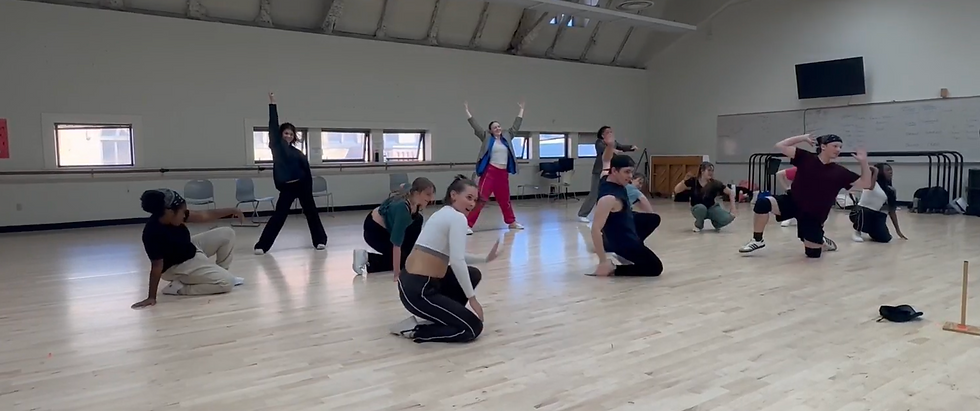
The opportunity to design and implement my A+PE with Company One at Wayne State University has been such an immensely meaningful experience personally, academically, and artistically. Working with these extraordinary dance student-artists and with Professor Lisa Wilmot allowed me to observe, refine, and articulate the practice that has guided me for years. I approached this project with gratitude and excitement, recognizing how fortunate I am to have been entrusted with such an opportunity.
The Wayne State Department of Theatre and Dance, with its commitment to excellence, rigor, and creativity, provided the perfect environment to examine the intersection of structure and joy. As Professor Wilmot mentioned in her welcoming message for our Artistic Praxis II course, the A+PE “is a space to merge artistry and pedagogy in real time.” That perspective encouraged me to view my project as a laboratory and community, where learning, artistry, and humanity meet.

Delivery of the Artistic + Pedagogical Experiment
My A+PE was less about proving something new and more about uncovering what was already present, about paying attention to what had been quietly shaping my teaching all along. Through HeartBeats and Sole with Company One, I had the opportunity to bring lived experience into a more intentional and reflective process. This project allowed me to see my own practice with fresh eyes, to understand how and why it resonates with others, and to grow alongside the dancers as we explored what joy, connection, and artistry can mean in community.
The design of the project wove together my structured “Hip Hop Toolbox” with open creative exploration, creating space for both discipline and discovery. Each session moved through four guiding phases that continue to shape my pedagogy: Grounding, Connection, Creation, and Reflection.
Grounding invited dancers to arrive fully, through breath, rhythm, and ensemble awareness, cultivating a sense of presence in both body and mind.
Connection encouraged dancers to engage not only with one another but with the imagined audience, centering empathy, awareness, and shared energy.
Creation became a space for collaborative choreography, where dancers explored movement inspired by their own experiences of joy, gratitude, and faith.
Reflection was woven throughout, brief check-ins during the work and deeper group conversations at the close of each session—helping us pause, listen, and make meaning together.
This rhythm mirrored what Jaffe, Kelley, and Evans (2016) describe in The Teaching Artist Handbook, that true teaching artistry balances creative practice with learning facilitation. It also reflected Emdin’s (2017) call to “recognize the humanity” of learners as the foundation of all education.

Through this process, I witnessed how structure and freedom can coexist. The dancers engaged deeply, not only mastering choreography but also finding renewed meaning in their movement (them enjoying the movement themselves, and with their peers, and also imagining the joy it would bring to others). The project reaffirmed my belief that joy is both a method and an outcome, and that when students experience genuine joy, learning expands far beyond the studio.
Participant Learning Outcomes
The success of this project was not measured by technical mastery but by transformation. The dancers’ growth and my growth reflected what I have seen in communities around the world: when joy is central, artistry deepens, and connection flourishes.
The Company One dance student-artists demonstrated development in four key areas:
Embodied Joy – Dancers moved with authenticity, allowing joy and gratitude to shape their performance.
Collaborative Agency – They contributed ideas and took creative ownership, transforming rehearsals into spaces of co-creation.
Artistic Identity – Participants discovered and articulated their individual motivations for dance, linking purpose to expression.
Audience Presence – They cultivated awareness of shared energy, learning to extend movement beyond the self and into “the audience”.
While guiding one of the dancers, I encouraged her to imagine a little girl in the audience watching with wide eyes and pure excitement, perhaps dreaming that one day she could stand where the dancer now stands. In that moment, something shifted. The dancer’s imagination took flight, and her movement became alive with purpose. She became brighter, her facial expression became more inviting and full of joy. That moment captured the very essence of this project: dancing not only from joy, but for joy.
Findings, Challenges, and Professional Relationships
An observation that emerged through this project was that joy and structure are not opposites, they strengthen one another.Discipline and freedom can exist in partnership. Clear structure gave dancers a sense of safety and trust, which allowed creativity to flourish without fear.
During one of my check-ins, Professor Wilmot reminded me to trust reflection as choreography itself. That insight highlighted the way I view teaching. Reflection is not separate from movement, it is part of the dance. I had not realized this before, but often in my practice I use pauses (silence - sometimes with breath), conversation, and other exercises as intentional components of the creative process. Sometimes this meant stepping away from choreography to introduce other tools that could help dancers develop different aspects of their craft. For example, with Company One, I noticed moments when dancers were becoming mentally or physically fatigued, so I began to weave in elements from my theatre and acting background, exercises that encouraged them to center themselves, and project energy outward through breath, body, and imagination.
I realized how naturally I reach for these tools, drawing from years of practice and experience, even when they are not part of my written plan. Although I am always developing in this area, I am deeply grateful for this ability, to often sense when the energy in the room needs to shift and to respond creatively. When I introduced these acting-based tools to the Company One dancers, many of them had never experienced such techniques before, which made the process truly exploratory. It became a joyful moment of shared discovery. Watching them light up and expand their energy through body, breath, and imagination reminded me of my own time as a student in that very studio. Joy and energy filled the room again, contagious, alive, and deeply human. That moment of reflection recharged the dancers and offered them a tool they can carry with them throughout their artistic journeys.
The professional relationships that grew from this project were among its most meaningful outcomes. Working with the Company One dancers reshaped how I understand collaboration. Together, we became partners in discovery, each contributing ideas, perspectives, and moments of honest vulnerability that deepened both the art and the process. My connection with Professor Wilmot and the Wayne State Department of Theatre and Dance also strengthened throughout this journey. Their mentorship and guidance provided not only support but also inspiration that will continue to shape my pedagogical and creative practice.
The greatest challenge I encountered was time. Balancing the completion of choreography with space for authentic reflection required constant recalibration. In future projects, I plan to weave verbal reflection more deliberately into the creative flow rather than saving it for the end. Doing so will allow reflection to become an active, living part of the artistic process, something that informs the work as it unfolds.
Reflection and Future Inquiry
This A+PE experience became a moment of clarity. It allowed me to see my work with fresh eyes, to name practices I have carried for years, and to understand them within a broader pedagogical framework. It reminded me how much of my teaching has been shaped by the communities, dancers, and mentors who have poured into me. This project helped me honor that history while also expanding it.
As I wrote in my Fieldwork Phase 3 reflection, “God really helped us in every single aspect from the beginning of forming Memphis Belle up until now, He centered our program on joy, community, connection, and service”. That truth continues to ground me. My teaching and choreography come from a place of faith, humility, and gratitude, and I do not take lightly the responsibility of guiding others in creative and vulnerable spaces.
Looking ahead, I hope to continue evolving this Joy-Forward Pedagogy through new collaborations, research, and community engagement. One of my next goals is to bring this framework to Covenant House New York, where I hope to integrate movement, reflection, and community-building practices that support healing and self-worth for young people. I also plan to build partnerships with faith-based and community organizations where artistry, service, and spiritual wellness can exist together in meaningful ways.
Ultimately, this A+PE affirmed something essential: teaching artistry is not about perfecting dance, it is about cultivating joy, encouraging the dancer, and building vibrant communities. I am deeply grateful for this experience and for the dancers who helped bring this work to life.

References
Emdin, C. (2017). For White Folks Who Teach in the Hood... and the Rest of Y’all Too. Beacon Press.
Jaffe, N., Kelley, B., & Evans, B. (2016). Teaching Artist Handbook: Tools, Techniques, and Ideas to Help Any Artist Teach. Oxford University Press.


Comments